Most traders pull up a TPO chart, see a wall of letters, and immediately click away because they think it’s a code. In this Quantower (Optimus Flow) tutorial, we break down TPO Charts (Time Price Opportunity) from the ground up so you can master Market Profile structure and stop trading blindly.
Discover how to track time-at-price to find where institutional value is building, identify structural divergence, and configure the platform step-by-step.
What You Will Learn:
– What TPO Charts show you that standard candlesticks completely hide.
– The 3 core pillars of Market Profile: POC, Value Area, and Profile Shape.
– How to read the Initial Balance (IB) to anticipate trend days versus balance days.
– Step-by-step TPO configuration in Optimus Flow (brackets, aggregation, and custom steps).
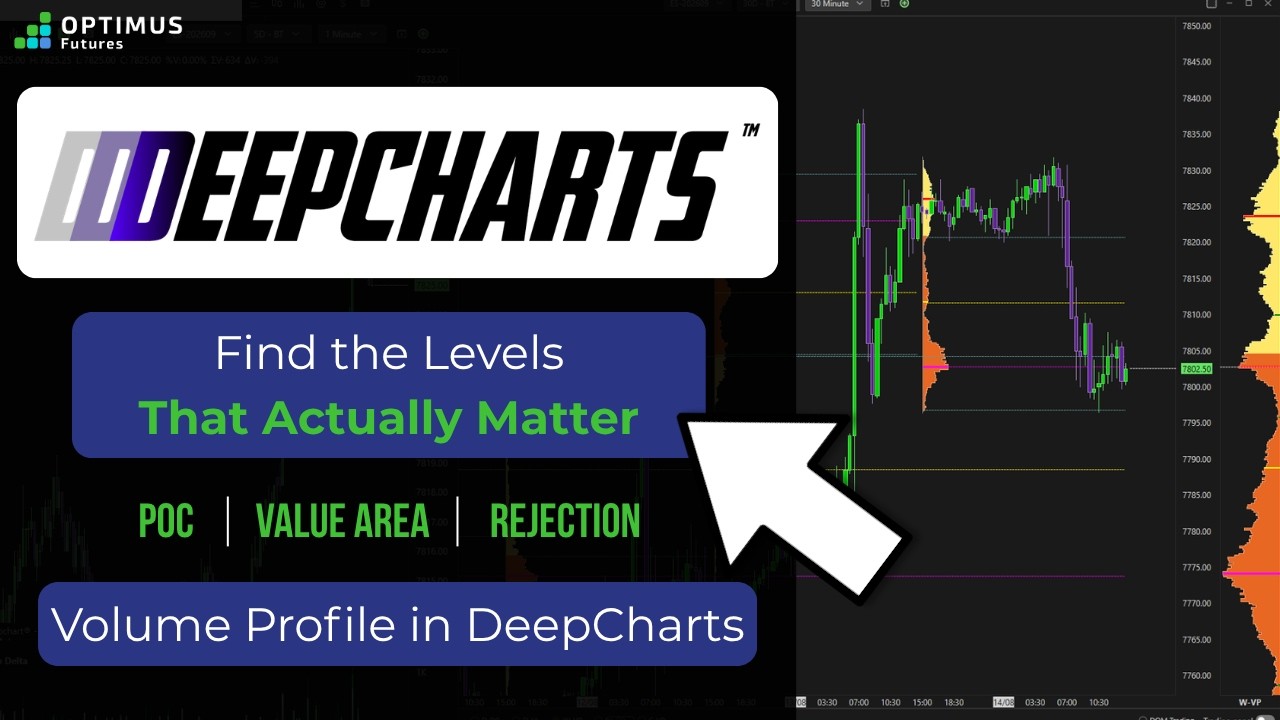
– How to overlay Volume Profile to spot clear technical confluence and divergence.
Timestamps:
[00:00] – Why TPO Charts Confuse Most Traders
[00:34] – What TPO Shows You (vs Volume Profile)
[01:46] – The Three Core Reads + Initial Balance
[03:05] – Setting Up TPO Charts in Optimus Flow
[04:00] – Combining TPO With Volume Profile for Confluence
Want to learn more about Optimus Futures? Visit our website: https://optimusfutures.com/
Learn to Trade Futures: https://learn.optimusfutures.com
Our commissions, margins, and pricing: https://optimusfutures.com/Futures-Trading-Pricing.php
Open an account with us today! https://optimusfutures.com/Futures-Commodities-Trading-Account.php
Please don’t forget to like the video, comment, and subscribe! THANKS FOR WATCHING!
There is a substantial risk of loss in futures trading. Past performance is not indicative of future results. When considering technical analysis, please remember educational charts are presented with the benefit of hindsight. Market conditions are always evolving, and technical trading theories and approaches may not always work as intended. The placement of contingent orders by you or broker, or trading advisor, such as a “stop-loss” or “stop-limit-order, will not necessarily limit your losses to the intended amounts, since market conditions may make it impossible to execute such orders. The high degree of leverage that is often obtainable in commodity interest trading can work against you as well as for you. The use of leverage can lead to large losses as well as gains. Optimus Futures, LLC is not affiliated with nor does it endorse any trading system, methodologies, newsletter, or other similar service. We urge you to conduct your own due diligence.