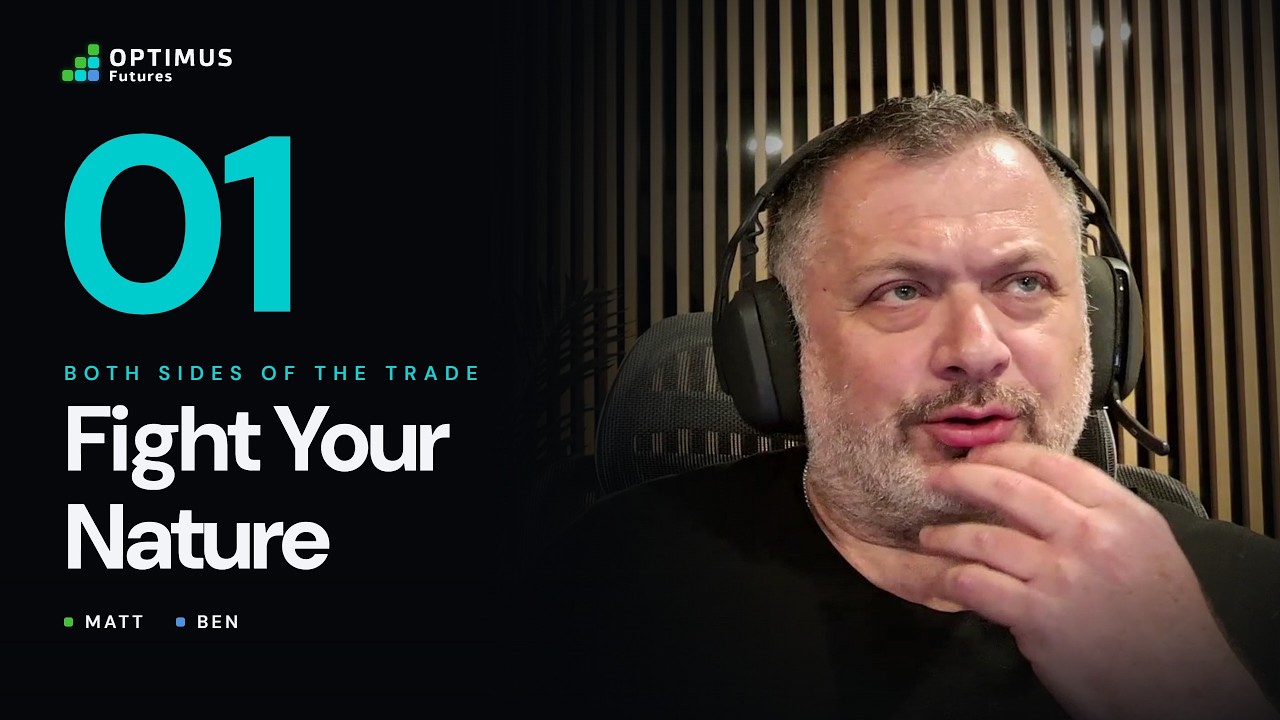
Mastering trading psychology is essential because trading is a business of decision making, and most of what drives those decisions is wired in.
In the first episode of Both Sides of the Trade by Optimus Futures, Matt and Ben talk about why traders have to fight their own human nature, and what it takes to build real discipline that holds under pressure.
In this episode:
– Why knowing your mistakes is not the same as stopping them
– Cognitive biases, loss aversion, and why a loss hurts more than an equal gain
– Overtrading and trying to win back a loss the same day (revenge trading)
– Grading your process instead of the outcome of one trade
– Why leverage amplifies every emotion in futures trading
Chapters:
[00:00] – Cold Open: Overtrading
[00:11] – Intro: Welcome to Both Sides of the Trade
[04:38] – Trading as the Business of Decision Making
[08:56] – Hardwired Cognitive Biases in Trading
[12:53] – Common Retail Mistakes and Overtrading
[16:52] – Creating Enforceable Rules for Your Strategy
[22:46] – The Navy SEAL Approach to Trading Discipline
[26:41] – Process vs. Outcome in a Probabilistic Market
[38:39] – Loss Aversion: Why a Loss Hurts More Than a Gain
[41:40] – Why Trading Needs to Be a Lonely Sport
[47:11] – What Problem Are You Trying to Solve?
[50:13] – How Leverage Amplifies Every Emotion
[56:14] – Wrap-up
Tell us in the comments what you are struggling with in your trading. Matt and Ben will take those questions on in future episodes.
Want to learn more about Optimus Futures? Visit our website: https://optimusfutures.com/
Learn to Trade Futures: https://learn.optimusfutures.com
Our commissions, margins, and pricing: https://optimusfutures.com/Futures-Trading-Pricing.php
Open an account with us today! https://optimusfutures.com/Futures-Commodities-Trading-Account.php
Please don’t forget to like the video, comment, and subscribe! THANKS FOR WATCHING!
This material is for educational purposes only and should not be construed as trading advice or a recommendation to buy or sell any futures contract. Trading futures and options involves substantial risk of loss and is not suitable for all investors. You should carefully consider whether such trading is suitable for you in light of your financial condition and risk tolerance. The high degree of leverage available in futures trading can work against you as well as for you, and losses may exceed your initial deposit. Past performance is not necessarily indicative of future results. Optimus Futures, LLC does not endorse any trading system, methodology, predictive model, newsletter, or similar service. You are solely responsible for your trading decisions and should conduct your own due diligence. The placement of contingent orders by you or broker, or trading advisor, such as a “stop-loss” or “stop-limit” order, will not necessarily limit your losses to the intended amounts, since market conditions may make it impossible to execute such orders.